

When This Action Runs
The Pre-Call API Request executes immediately after the call is answered, but before any conversation logic begins. Typical execution order:What the API Request Can Do
The Pre-Call API Request allows your system to interact with external services such as:- CRM systems
- Customer databases
- Order management platforms
- Fraud detection services
- Authentication systems
- Analytics platforms
- Retrieve customer information using the caller’s phone number
- Verify account status
- Load order or subscription data
- Trigger CRM events
- Send call start notifications to other systems
How to Add a Pre-Call API Request
Pre-Call Actions can only be added at the very beginning of a workflow, before the conversation flow starts. This starting point is the Start Flow. The Start Flow is the block that runs first when a call is answered. By default, this block may be labeled Greeting Message, but it can be renamed to match your workflow. Pre-Call Actions are added above the Start Flow, so this block must be configured first before the option to add Pre-Call Actions becomes available.Set the Start Flow
Open your Flow Editor and select the block that should run when a call begins.In the configuration panel on the right, enable Set as First Flow.When this option is checked, Phonely will always start the workflow with this block whenever a call is received. Once it is set, the system enables the Pre-Call Actions area above the Start Flow.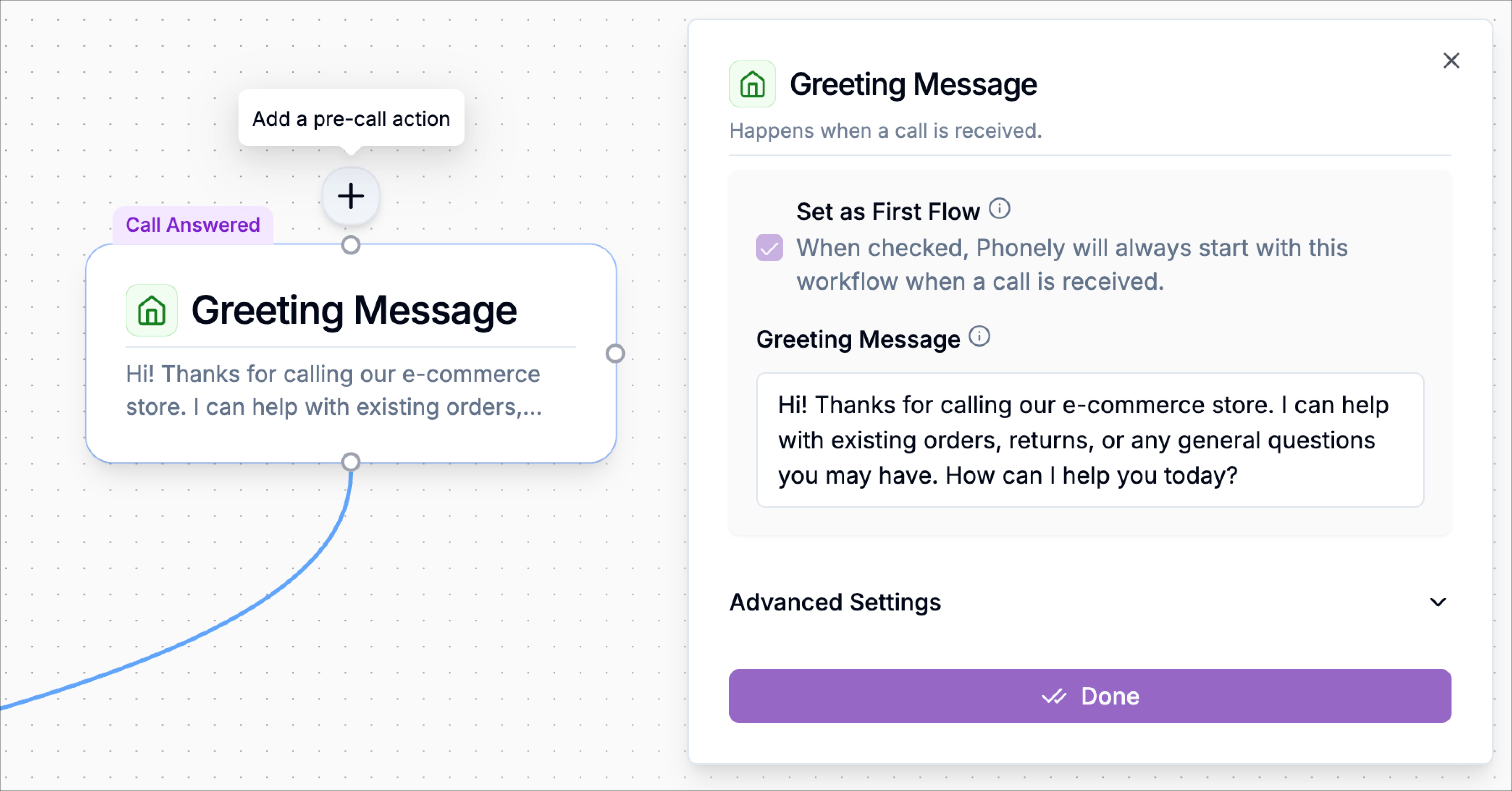
Add a Pre-Call Action
After the Start Flow is configured, a ➕ button will appear above the beginning of the workflow labeled Add a pre-call action.Click this ➕ button.
Setup
In the Setup stage you define the request structure. Phonely allows two ways to configure the API call:Option 1 — Import from cURL
If you already have a request from tools like Postman, API documentation, or terminal commands, you can paste it directly. Paste the cURL command into the cURL Command field and click Import from cURL. Example:- HTTP method
- API endpoint
- headers
- query parameters
- request body
Option 2 — Build Manually
If you don’t have a cURL command, select Build Manually. You will then configure the request step-by-step in the Configure section.Configure
The Configure tab defines how the API request should behave.API Method
Select the HTTP method used by the API. Supported methods:- GET – Retrieve information from a system
- POST – Send new data to an API
- PUT – Update an existing resource
- PATCH – Partially update a resource
- DELETE – Remove a resource
API URL
Enter the API endpoint where the request will be sent. Example:Headers
Headers provide additional metadata required by the API. Click Add to create key-value pairs. Common examples include:| Header | Example Value |
|---|---|
| Content-Type | application/json |
| Authorization | Bearer YOUR_API_KEY |
Query Parameters
Query parameters allow you to send additional information through the URL. Example:| Key | Value |
|---|---|
| customer_id | 123 |
Advanced Settings
The Advanced Settings section allows you to control how the API request behaves during execution.Enable Error Handling
When enabled, the system can detect failed requests and handle them gracefully. Example scenarios:- API unavailable
- authentication error
- invalid request
Retry on Failure
If the API request fails due to temporary issues, Phonely will automatically retry the request. This helps prevent interruptions caused by short network or server delays.Timeout Duration
Defines how long Phonely waits for the API response before considering the request failed. Example:Interim Message
If the API request takes time, Phonely can send a short message to the caller to indicate progress. Example:“One moment while I retrieve your information.”This prevents silence during longer API requests.
Interim Message Prompt Type
Two options are available: Fixed The message is predefined and always the same. Promptable Phonely dynamically generates a short message using AI based on the configured prompt. Example prompt:Generate a friendly 3–7 word interim message telling the caller you are working on their request.
Post Interim Message Delay
Adds a small delay after the interim message before the API request continues. This makes the interaction feel more natural.Call Outcome Tagging
You can assign outcome tags for reporting and analytics. Example tags:customer_lookup_successaccount_verifiedapi_timeout
Test Stage
After configuration, use the Test step to validate the request. Click Test to send the request exactly as configured. Phonely will display the API response immediately. If successful, you may see a response like:- incorrect endpoint
- missing authentication
- invalid parameters
- server errors