

This is particularly useful for integrating Phonely with CRMs, analytics dashboards, or automation tools like Zapier, or custom APIs. You can configure this integration to:
- Send all call data (for analytics or logging)
- Send specific fields only (for lightweight or customized workflows)
- Format and control the payload using manual or code input modes
Access the Send Call Data Block
- Go to Agent Design in your Phonely dashboard.
- Open or create a workflow.
- Click the plus (+) icon after any block (commonly after End Call).
- From Post Call Actions, select Send Call Data.
Configure Webhook Settings
In the Configure tab, you’ll define where Phonely should send your call data.Webhook URL
Enter the endpoint URL where the data will be sent.Send Full Call Data
Toggle Send full call data to decide whether Phonely should send all available call fields or only specific ones.Option A: Full Call Data.
When this is checked, Phonely automatically sends the entire call payload to your webhook.Option B: Custom Call Data
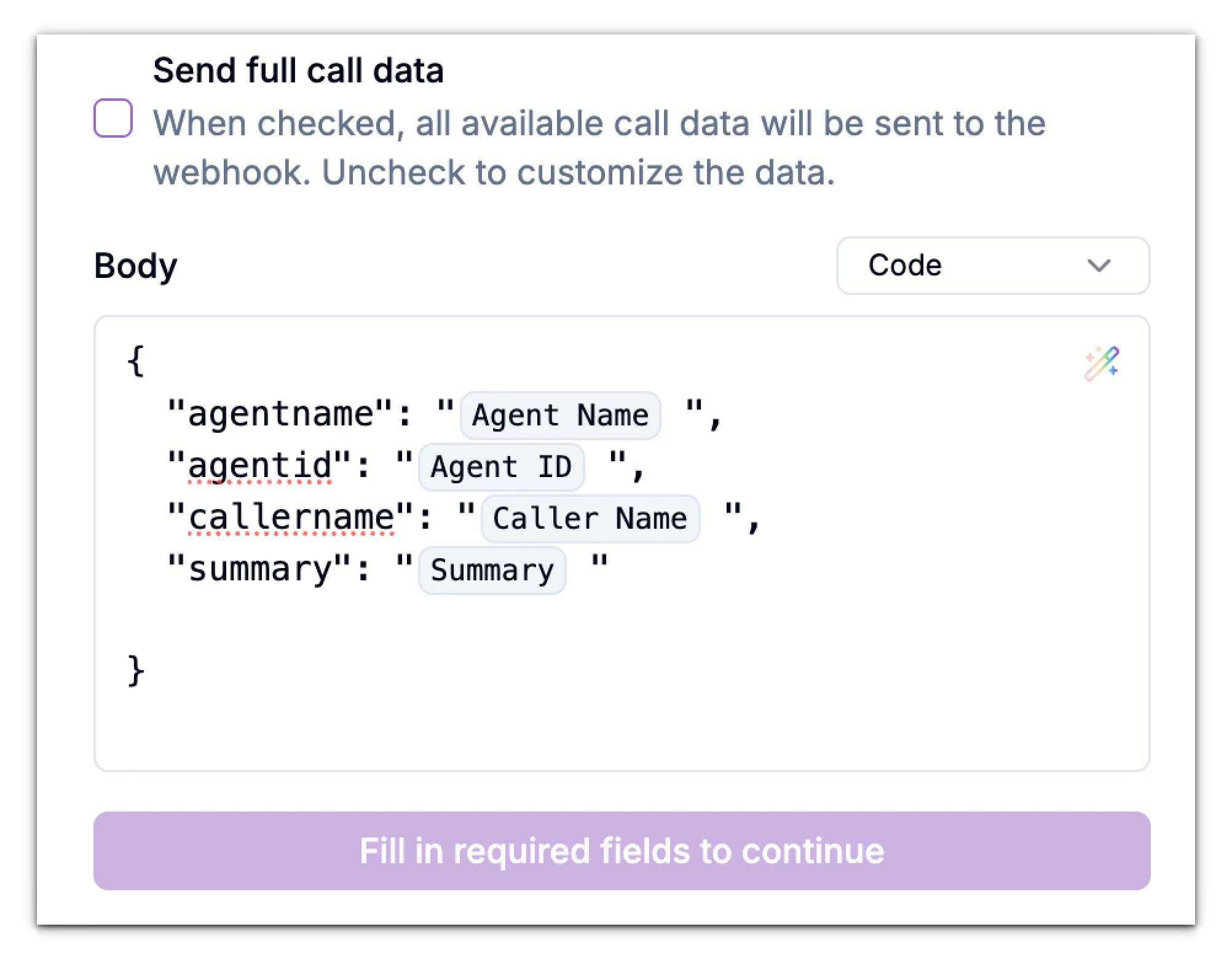
If you uncheck Send full call data, you can manually define which fields and values to include in your payload. You’ll then see the Body section with three options for customization:- Manual
- Code
Manual Mode
The Manual option lets you build a JSON payload by specifying each key-value pair directly.How to Use
- Click Add Field to create new entries.
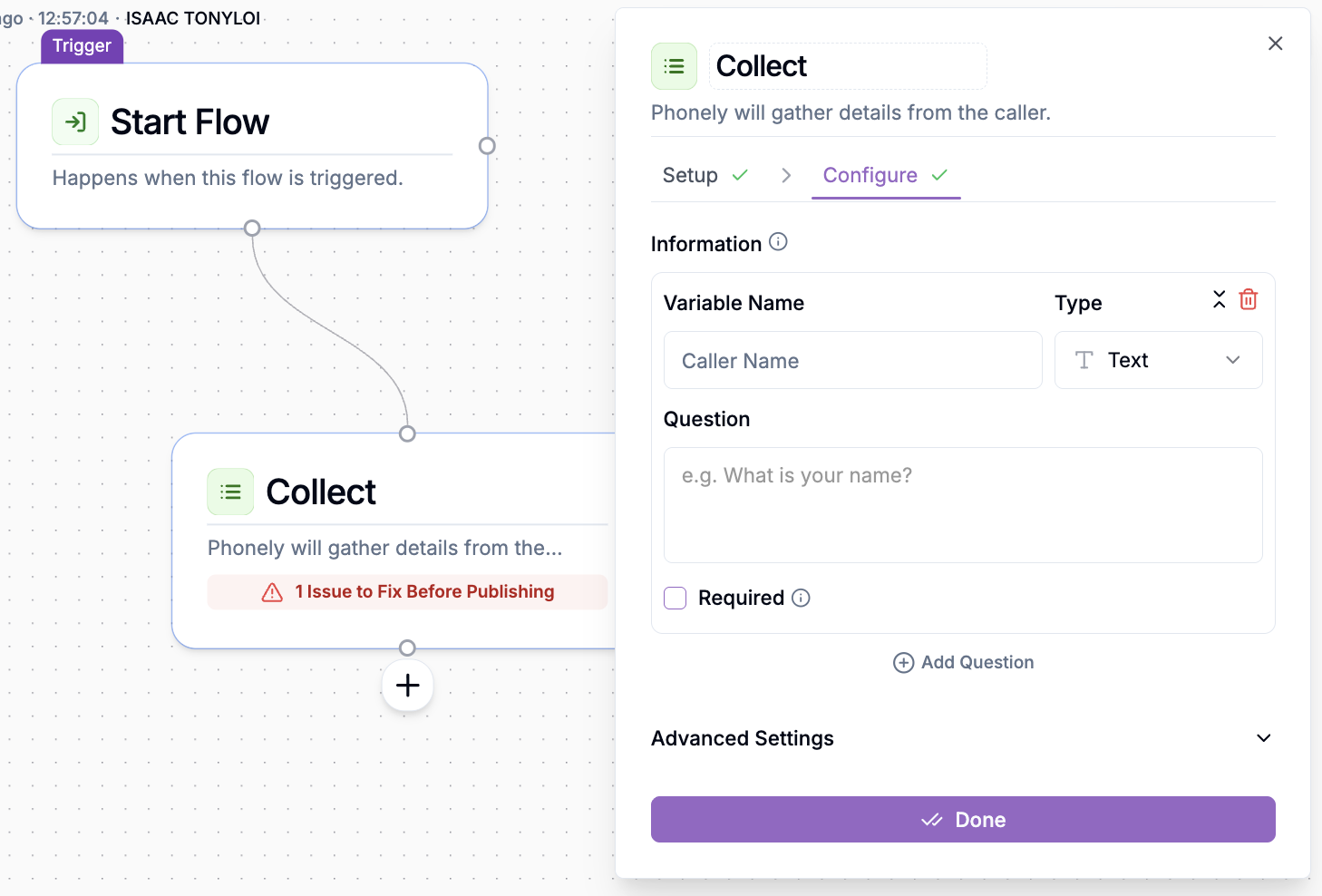
- Under Key, define the name of your data field (e.g.,
callerName,callSummary). - Under Value, enter a static value or select a dynamic variable from your workflow.
- Select the Type (String, Number, Boolean, etc.) for each field.
Code Mode
For advanced users, the Code option allows you to directly write or paste raw JSON.You can freely format your request body, insert variables, and structure nested objects.
Test the Configuration
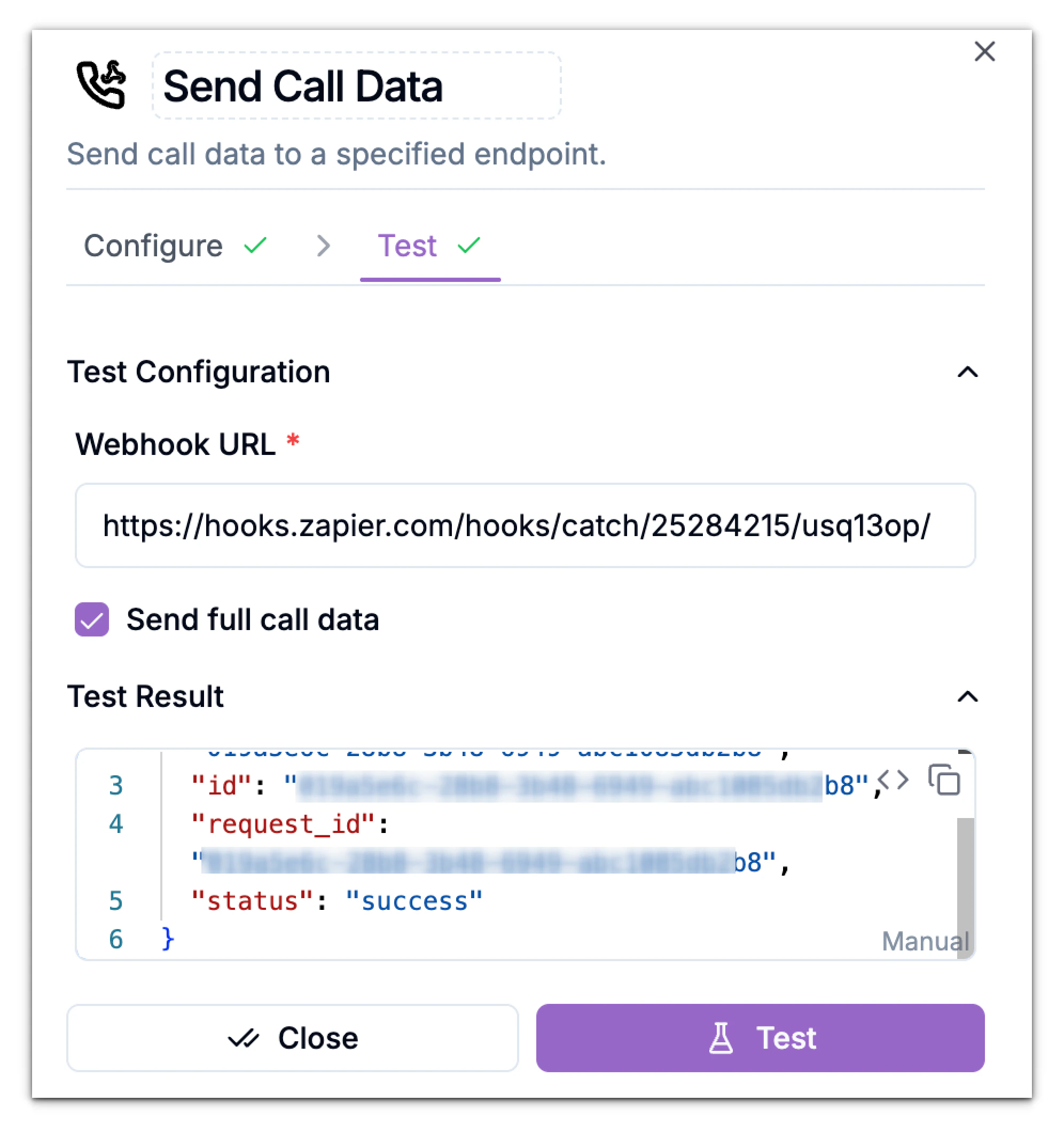
Once your webhook and payload are set up, switch to the Test tab to verify the connection.- Confirm your Webhook URL is correct.
- Choose whether to send full or custom call data.
- Click Test.
If successful, you’ll see a Test Result preview with the response returned from your endpoint.
- Check that your webhook URL is accessible and accepts
POSTrequests. - Ensure SSL (HTTPS) is enabled for secure transmission.
- Review any authentication requirements on your server.